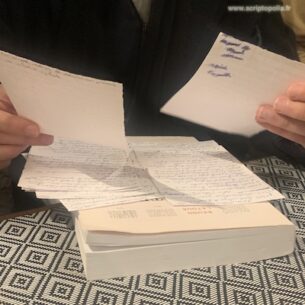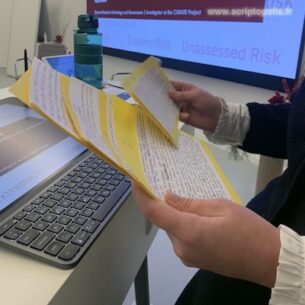
Paris, November 2025. There are many ways to read books. You can read with people or alone, devour the entire work in one sitting, focus on specific passages in search of information, or skim through it during a commute. You […]
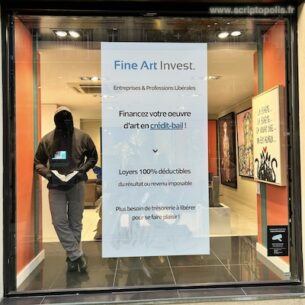
Marseille, July 2025 Even when “beauty” is no longer the main focus of contemporary art, the gallery exhibition remains one of the most important vehicles for the aesthetic experience. As a matter of principle, it is coupled with a sales […]
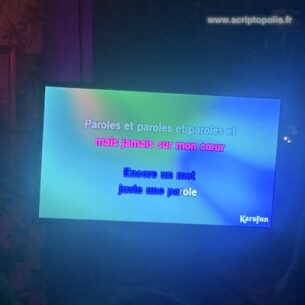
Lyon, May 2025. Gibson’s environmental psychology showed that when we perceive something, we don’t primarily perceive its qualities (colour, shape, surface, substance, etc.), but its affordances. The neologism refers to the potential for action: what living beings perceive of the […]
London, May 2025. I had just emerged from the Eurostar tunnels into the St. Macras shopping centre. In the middle of the crowd, a highly focused man kept looking at his mobile phone. His hands were precisely searching the strings […]
The point about mathematical proofs relying on embodied techniques and instruments really reframes how we see abstract thought. It makes me consider how much even our internal reasoning is shaped by external tools like pen and paper.
The point about mental activities relying on embodied techniques and instruments really reframes how we view abstract thought. It makes me consider how much even our internal monologue depends on learned, physical practices like writing. A fascinating perspective!
The point about writing being a physical technique that anchors abstract thought really stood out, especially with the example of mathematical proof. It made me think of how different note-taking styles actually shape the way I process a problem. Scribbling on paper versus typing in a document feels like it engages completely different parts of the brain.
The observation about writing being a physical technique central to abstract thought really resonates. It makes me wonder how much of our “pure” reasoning is actually shaped by the tools we use without noticing. Recently, while trying to work out a problem by hand, the shift from typing to writing felt like it changed the thinking process itself.
The point about mathematical proofs relying on embodied techniques and instruments really reframes how we see abstract thought. It makes me consider how much even our internal reasoning is shaped by external tools like pen and paper.
The point about mental activities relying on embodied techniques and instruments really reframes how we view abstract thought. It makes me consider how much even our internal monologue depends on learned, physical practices like writing. A fascinating perspective!
The point about writing being a physical technique that anchors abstract thought really stood out, especially with the example of mathematical proof. It made me think of how different note-taking styles actually shape the way I process a problem. Scribbling on paper versus typing in a document feels like it engages completely different parts of the brain.
The observation about writing being a physical technique central to abstract thought really resonates. It makes me wonder how much of our “pure” reasoning is actually shaped by the tools we use without noticing. Recently, while trying to work out a problem by hand, the shift from typing to writing felt like it changed the thinking process itself.